
Anagrama del gallo de Vicente de EsponaV. de Espona
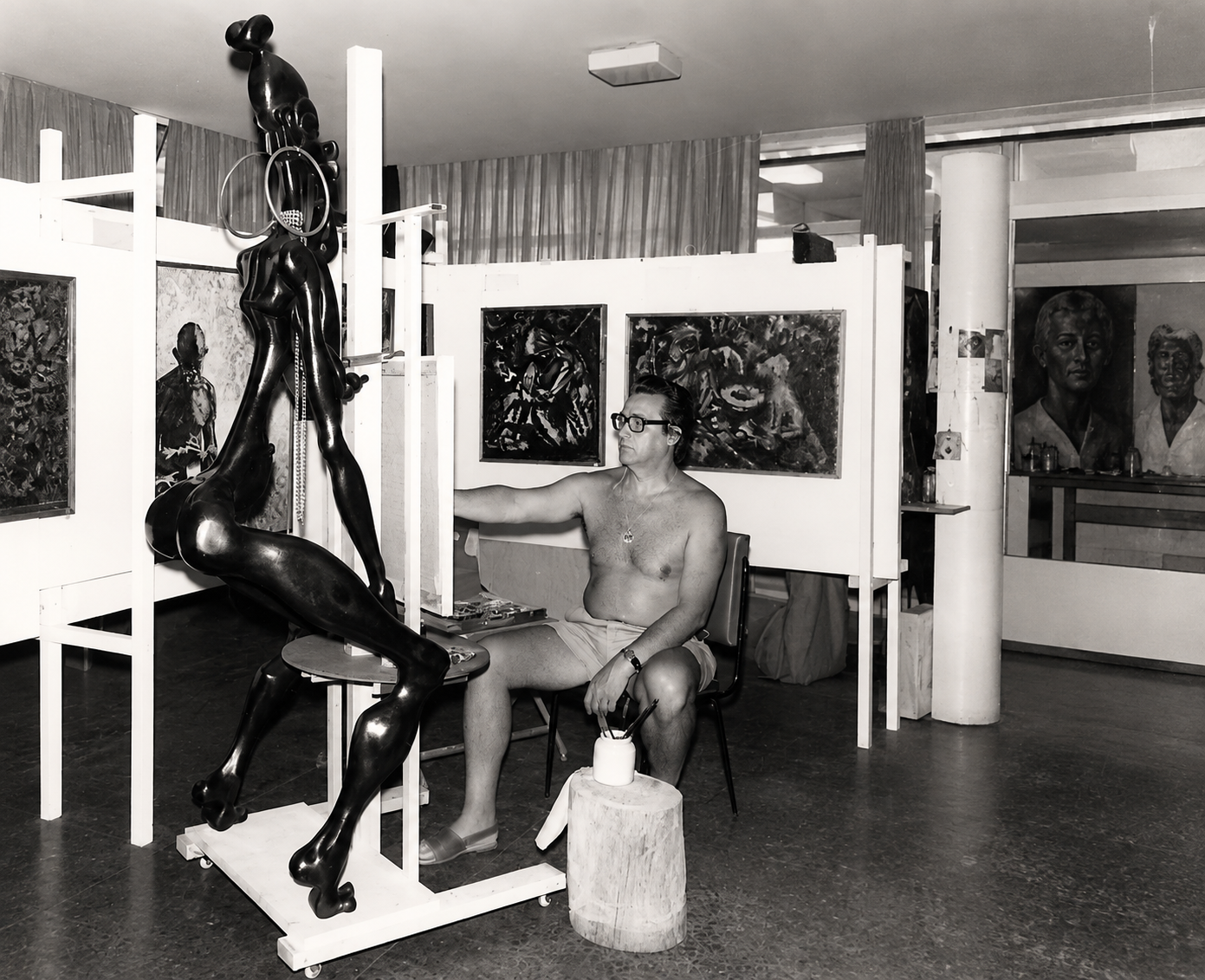
Vicente de Espona in his studio, alongside one of his sculptures and his paintings
Estudio Portillo · Personal archive

Biography

Chronicle of a Spirit Forged in Art

◦ 1918◇ 1995

From practising law in Barcelona to creating monumental sculptures in Marbella, Vicente de Espona's life spanned a war, two continents and a scandal that drove him away from the institutional art world — before he found his defining artistic language in bronze and stone.

1918 – 1936

Valencia, Barcelona and the war

He was born on 24 March 1918 in Valencia. When he was five, his family moved to Barcelona, where he began his studies with the Jesuits and developed an early interest in drawing and art.

The Spanish Civil War left a deep mark on him: he was awarded the Military Medal, was held captive at the Vallmajor checa and was named a Knight of Spain.
1944 – 1950

Law and banking, with art always present

He studied law at the University of Barcelona, pursued doctoral studies and worked as a legal adviser to Banco Popular Español. Art, however, remained a constant part of his life.

1951 – 1956

Brazil: years of discovery

He took a leave of absence and crossed the Atlantic. A determined self-taught artist, he made a living through art while working in many fields: architectural drafting, graphic design, set design, interior decoration and property development. Each gave him another way to use his talent.

1957 – 1968

São Paulo and Londrina

He opened his first public studio in São Paulo, working in painting, sculpture and printmaking, and held annual exhibitions across Brazil. He also illustrated books and pioneered theatrical window displays.

In Londrina, he created a monumental 125 m² stone mural. At an exhibition of religious art, he uncovered and publicly denounced a corruption scandal — an episode that led him to turn away from institutional art competitions for good.

1969 – 1970

Return to Spain

After a brief return to São Paulo, he settled permanently in Spain. He sought the tranquillity he needed for his work in Sant Esteve de Palautordera, among the mountains of Montseny.

1971 – 1995

Marbella: monumental works

He settled in Marbella, where his artistic language grew deeper and more symbolic. His works from this period include the Trono de la Pollinica in wood and bronze, the Sol de Marbella mural, the Monumento a Andalucía and his crowning achievement, Síntesis, in San Pedro de Alcántara — a twelve-metre-high work that is both abstract and spiritual.

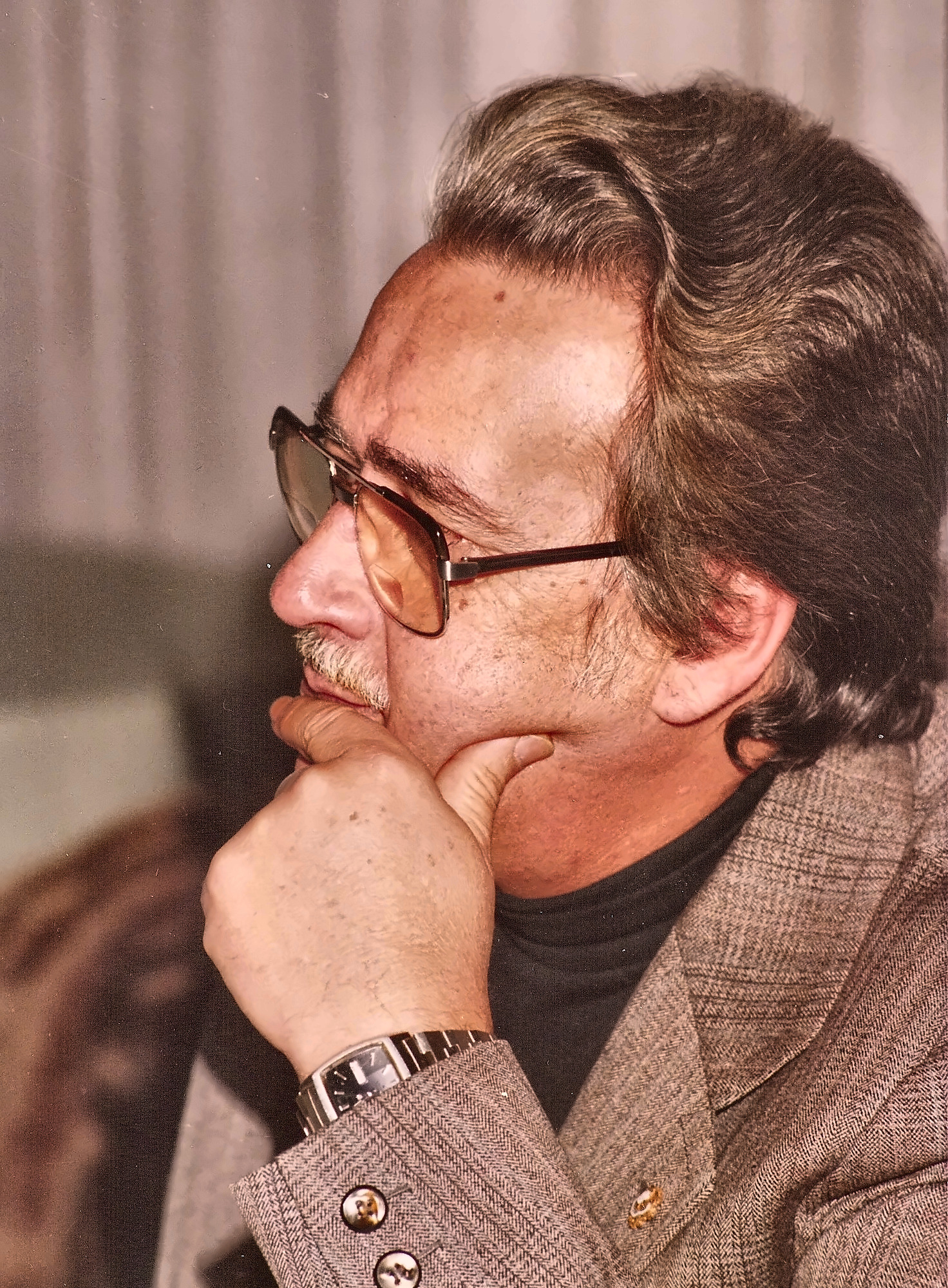
Profile portrait of Vicente de Espona
Personal archive
“Man, remember God.”

Inscription on Síntesis · San Pedro de Alcántara · 12 m

Featured works

Four works, one enduring quest

Síntesis
San Pedro de Alcántara Boulevard · 12 m · stone and concrete
Sol de Marbella
Former Casa de la Cultura · Façade mural
La Danza
San Pedro de Alcántara · Bronze
Regreso del Olivar
San Pedro de Alcántara · Sculptural ensemble