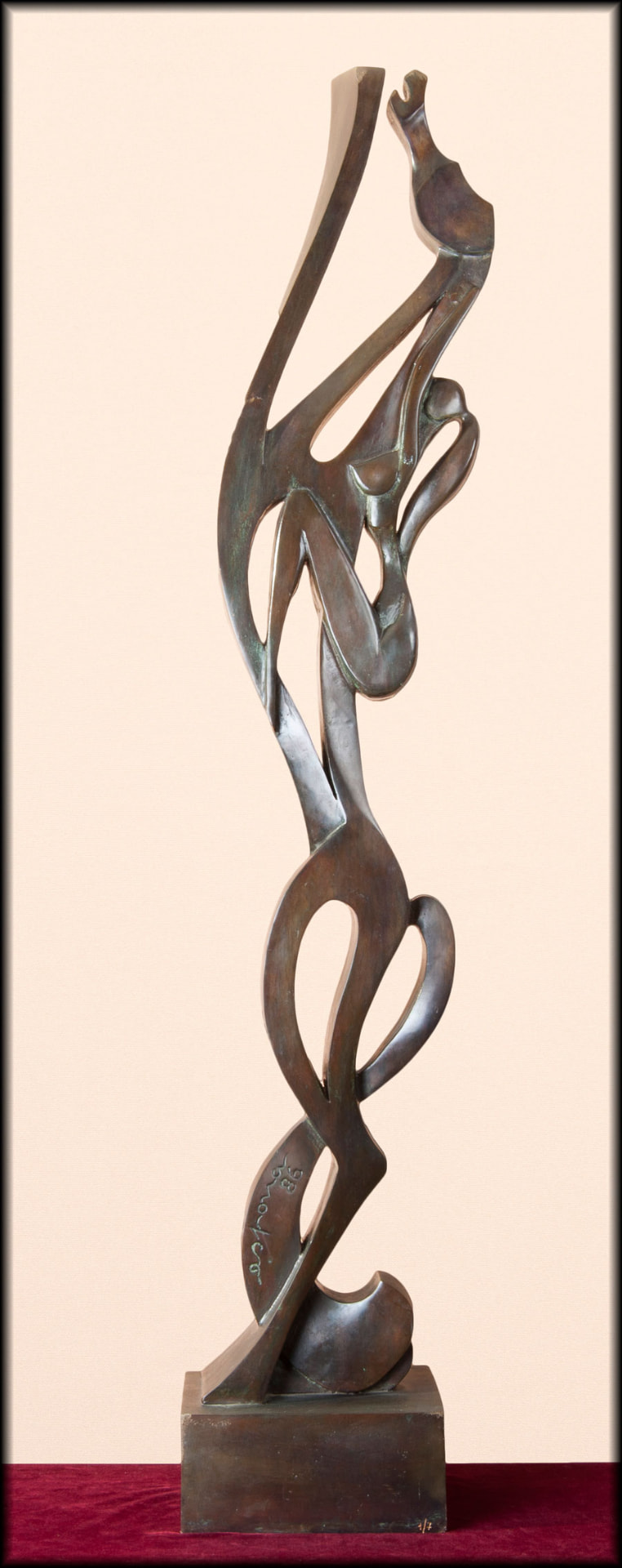
Amazona a caballo offers a stylised interpretation of the equestrian figure, in which rider and horse merge in a single upward movement. Elongated, flowing forms create a strongly vertical composition. Lines, curves and open volumes suggest the two bodies without fully defining them. Raised above the horse, the female rider conveys momentum, balance and freedom.
The interplay of solid form and open space is central to the work. Light passes through the sculpture, changing its appearance from one angle to another. Polished areas of bronze contrast with more textured surfaces, reinforcing the tension between solidity and lightness. Espona transforms a classical figurative subject into a dynamic, almost abstract composition in which movement takes precedence over literal representation.
The sculpture is especially rewarding to view from different angles: its silhouette changes, revealing new relationships between rider and horse. A succession of curves runs through the piece, linking the figures and creating a continuous sense of ascent and movement.
Its narrow, vertical composition lends elegance to the equestrian form and gives open space as much presence as the bronze itself. The work draws its strength from the tension between balance and motion, and between recognisable figures and their transformation into essential forms.
 V. de Espona