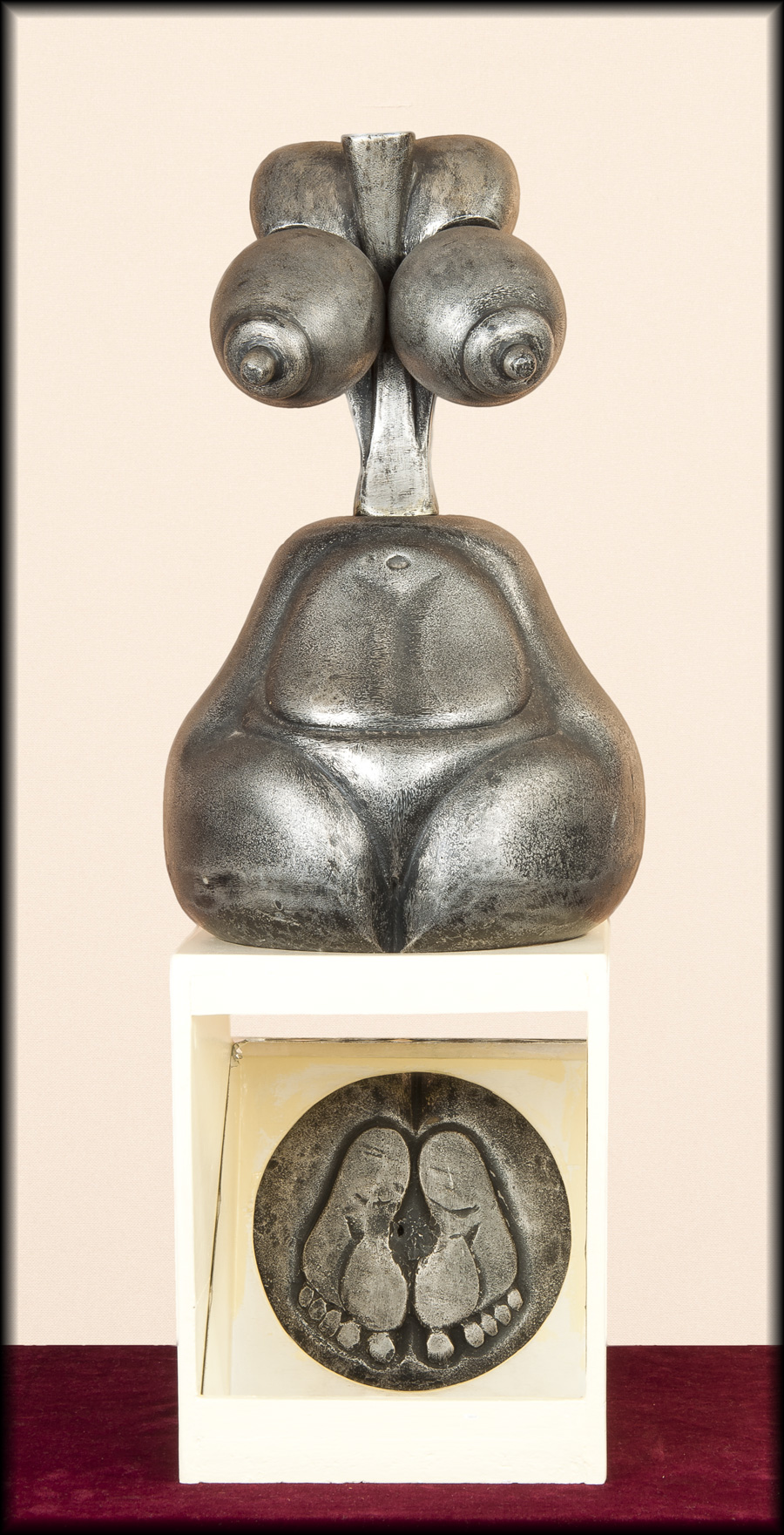
Inspired by Germanic, Celtic and Greek mythological traditions, this sculpture offers Vicente de Espona’s own interpretation of Idún and her apples of eternal youth. The simplified female body emphasises the breasts, hips and abdomen through bold volumes that evoke fertility, vitality and the origins of life.
The figure rests on a structure featuring a relief medallion with human footprints. This detail suggests the passage of time, ancestral memory and a connection between the divine and the human, giving the work the symbolic character of an altar or a mystical offering.
Made of aluminium, a material rarely used by Vicente de Espona, the sculpture approaches mythology from a contemporary perspective. Its allusions to Atlantis and immortality place it within an imagined archaeology, as though it were a relic of a lost civilisation.
Together, the female figure, pedestal and footprints turn the composition into a reflection on eternity, youth and collective memory.